What storage when moving house actually is
It's the in-between. Your completion dates don't line up, or the new place isn't ready, or the chain moved and now you're out on the 12th and in on the 30th. Your things need to be somewhere that isn't your mum's spare room.
The industry calls it bridging storage.
It is more common than it sounds. Roughly one in four agreed sales in the UK fall through before completion, the rate was 22.5% in April 2026 against a decade average of 24.5%, according to TwentyEA figures reported by PropertyWire. Plenty more complete late rather than never. If your move has slipped, you are in ordinary company.
There are two honest options and I'll put both of them properly.
I think collection suits most people most of the time, particularly mid-move when your week is already full. I don't think container sites are bad, I still think they have a long-term future and I intend to offer one eventually. It's a question of what your time is worth in the fortnight you're moving.
Lay both out and pick. You know your own diary better than I do.
How long will you need it
Nobody knows, including you, and that's fine. Most bridging jobs are a few weeks. Some run to months because a chain moved twice.
What matters more than the guess is whether the arrangement bends. Ask what happens if your date shifts by a fortnight, and whether that costs anything. With us, tell us when you want everything back and give us 24 to 48 hours' notice.
One thing to be clear about: you can't drop in and rummage. Your things come back to you on that notice, they aren't somewhere you can visit on a Sunday. If you need daily access to something, keep it with you rather than storing it.
Packing for storage, not just for moving
Packing for storage is slightly different from packing for a move, because things sit still for longer.
Books go in small boxes. It's the advice everybody gets given, and a big box of books is heavier than it looks right up until you try to lift it.
Clothes are better in boxes than bin bags for storage. Bags crease everything and they tear when they're stacked. Clothes you'll want soon should be in a bag that stays with you.
Chests of drawers are best emptied. Full drawers slide open when the piece is tilted, and the weight goes through the joints rather than the frame.
Label the side of the box, not the top, because you'll be looking at a stack from the side. Put the room and two or three actual contents. In eight weeks "kitchen misc" will mean nothing to you.
Photograph the back of the telly before you unplug it. It costs nothing and saves a small argument later.
Some things can't go into storage at all, ours included: food, plants, anything living, and hazardous items like petrol, gas and fireworks.
How ours works, and the bit that went wrong
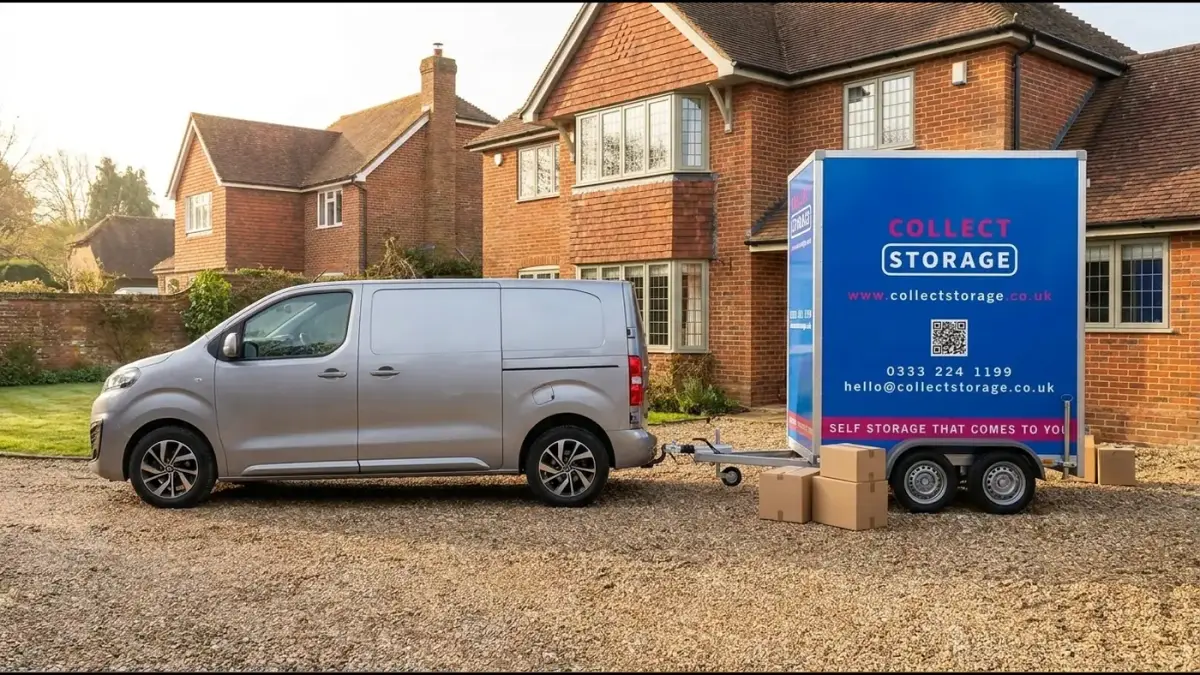
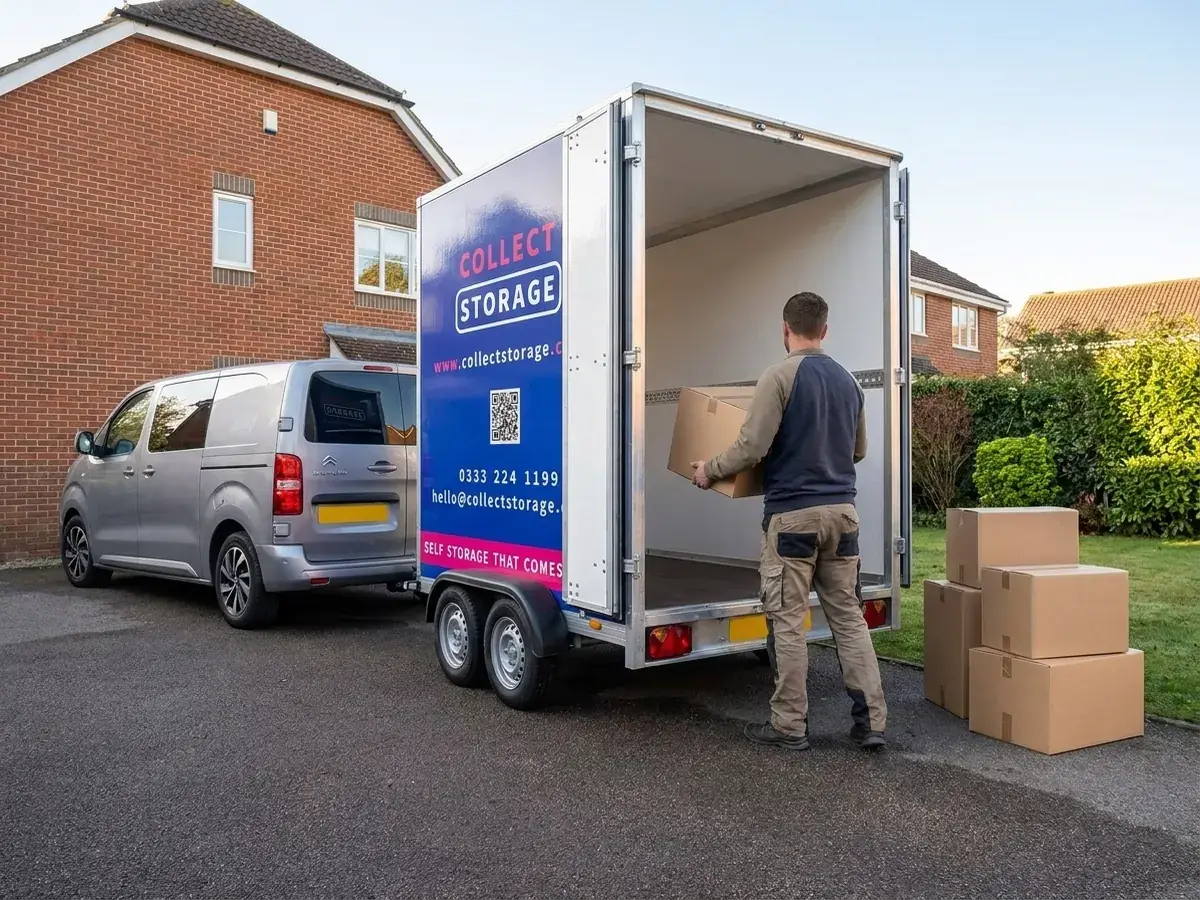
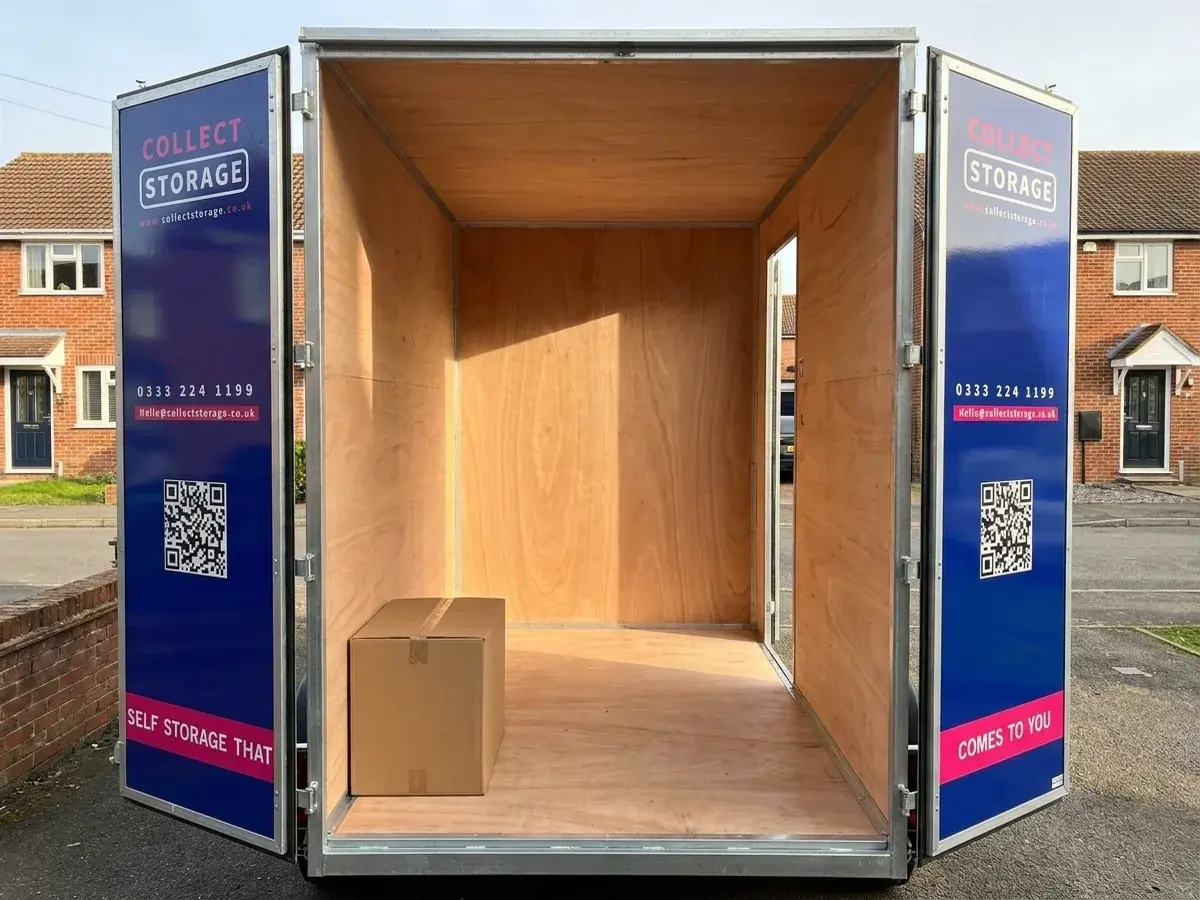
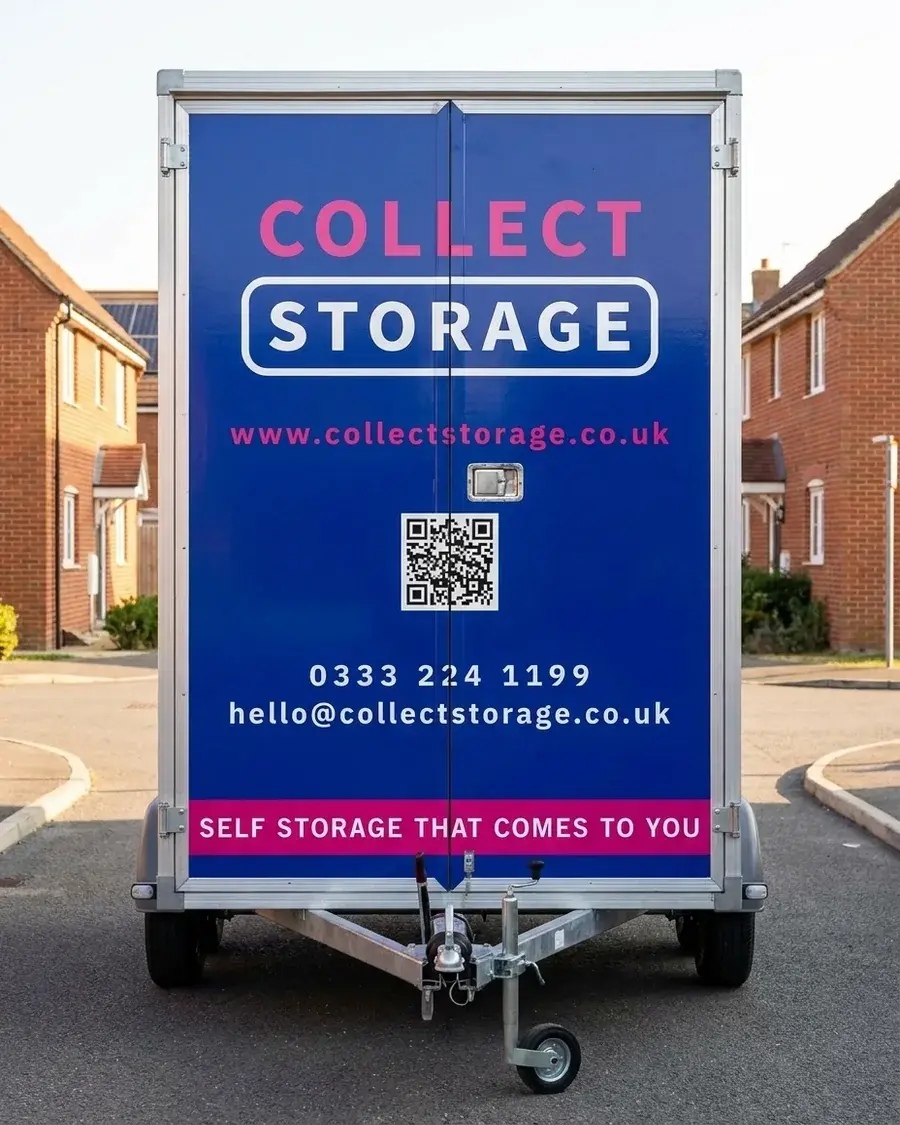
We bring a container to your door on the trailer. You fill it at your own pace, we'll help with the heavy bits. We take it to our facility at Lenham near Maidstone, which has no public access and is monitored by 24-hour CCTV with motion sensors. When you want it back, 24 to 48 hours' notice and we bring it. There's a fuller walkthrough on how it works, and the towns we cover are listed on our areas we serve page.
A one-bed flat takes us roughly one to two hours to collect and store.
We opened on 1 August 2026, so I'm going to be straight about where we are: August has been a set-up month. Containers delivered and built, CCTV fitted, trailers collected.
The trailer didn't go smoothly. When we collected it, the door wasn't locking properly and it swung open on the drive. It was empty, and it went straight back to the manufacturer to be put right before it carried anything of anyone's. The logo on the front had also been set off to one side, which nobody but me would ever have noticed, and which I noticed every single time I walked past it. That's been redone too.
I'd rather tell you that than have you find out that a new company's first month is a new company's first month. The kit is the only evidence you have about how your things will be treated, and I'm not putting a trailer with a dodgy door on your driveway.
If your dates have gone sideways and you're trying to work out where everything goes, our moving and bridging storage page has the detail. If you've only got a few things rather than a houseful, storage by the box may be the cheaper answer. If you'd rather just talk it through, we're on 0333 224 1199, or we can pop over and have a look if that's easier.
I hope that helps.
Common questions
- How much does it cost to put your house into storage?
- It depends on how much there is, which is why we quote each job. Our prices start from £18 a month including VAT for the smallest option. When you compare quotes, check whether the figure is an introductory rate or the ongoing one, and whether collection is included.
- What's the cheapest way to store things while moving?
- On the storage line alone, taking it to a site yourself is usually cheapest. Add van hire, fuel and two days of two people's time and the gap narrows a lot. Work out your whole cost rather than the monthly figure.
- How long before moving should I start packing?
- Start with the things you don't use about three to four weeks out: books, out-of-season clothes, spare bedding, the loft. Leave the kitchen and daily things until last, they're the ones you'll miss.
- What items can't go in storage?
- With us, food, plants, anything living, and hazardous items such as petrol, gas and fireworks. Most companies have a similar list, worth checking before collection day.
- Do I need to empty drawers before moving?
- For storage, yes. Full drawers open when furniture is tilted and the weight strains the joints.
- Can I get to my things while they're in storage?
- Not on the day. We return your things on 24 to 48 hours' notice, and there's no public access to the facility. Anything you'll need at short notice should stay with you.
- Do I need insurance?
- Contents insurance is required and isn't included in the price. You'll need a padlock as well, ours is £8. Budget for both wherever you store.
- What if my moving date changes?
- Tell us and we'll work around it. There's no minimum period, though the first month's charge is the minimum fee. Bear in mind that free collection and return applies when you store for three months or more, so on a shorter bridging job ask for the collection cost up front.